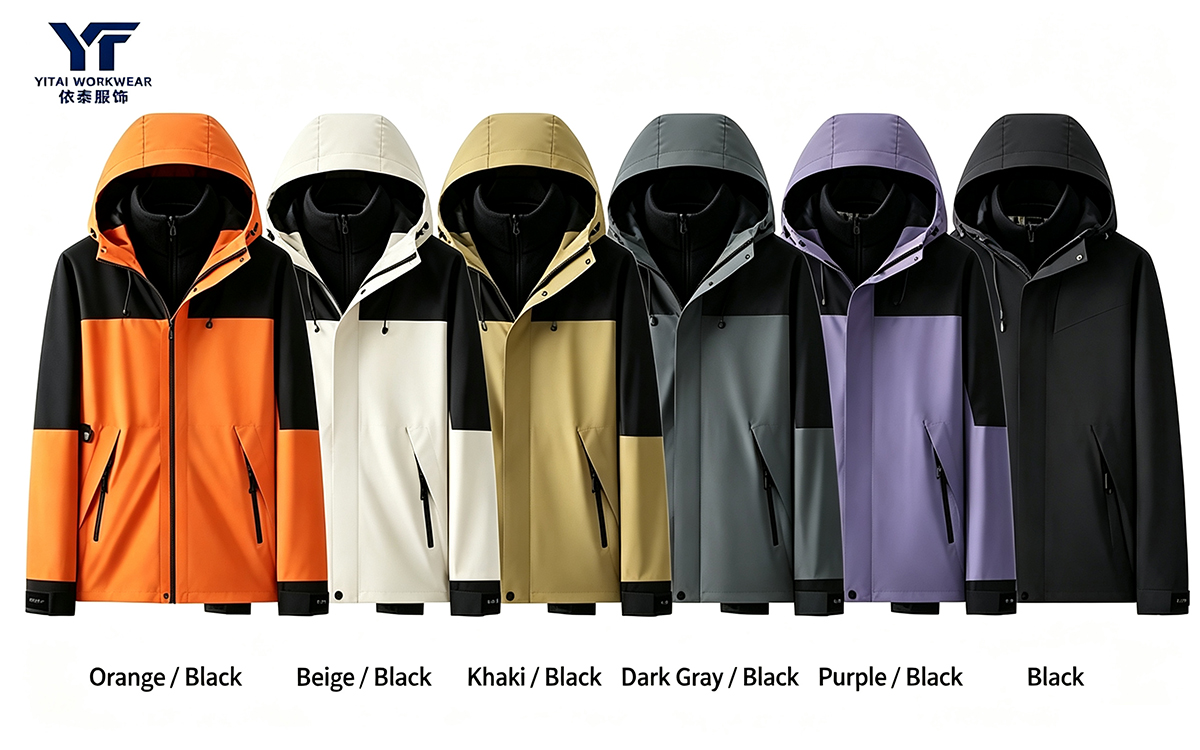
Learn how to select hardshell jackets. Compare EPTFE & PU waterproof‑breathable fabrics, 2‑layer /3‑layer /2.5‑layer fabrics, choose jackets for hiking, climbing & travelling.
1. Fabric Classification
When learning about softshell jackets, we should start with fabrics. To select cost‑effective softshell jackets, you need relevant professional knowledge. Now Linyi Yitai Apparel Co., Ltd. will walk you through how to choose softshell jackets.
There are numerous fabric names on the market, but they basically fall into two categories by performance.
- The first category is EPTFE laminated microporous fabric. Representative products include GORE‑TEX, DENTIK and EVENT. It is made by laminating a microporous film (smaller than water droplets yet larger than air molecules) onto outer shell fabric. It delivers waterproof & breathable performance, blocking rainwater while letting sweat vapor escape.
- The second category is hydrophilic fabric with PU / TPU coating or lamination. This type is widely adopted by most brands. Its waterproof‑breathable function is realized by non‑porous waterproof layers and hydrophilic molecular‑chain structures.
Comparison of the two fabric types
1. EPTFE fabric
✅ Advantages: Excellent waterproof and breathability, wide application scope, stable performance especially under low‑temperature conditions.
❌ Disadvantages: Relatively poor washing resistance, high cost.
2. PU fabric
✅ Advantages: Good durability, cost‑effective.
❌ Disadvantages: Breathability declines at low temperatures due to unstable material properties, narrowing its applicable scenarios.
Yitai further divides waterproof‑breathable fabrics into three sub‑categories by performance:
1. 2‑layer bonded fabric
Features soft handfeel and wide application range. A waterproof‑breathable membrane is bonded to the outer fabric. An inner lining is normally required during production to protect the membrane layer.
2. 3‑layer bonded fabric
Features outstanding durability. A waterproof‑breathable membrane and inner liner are directly bonded to the outer fabric. No extra lining is needed in finished garments.
3. 2.5‑layer fabric
Ultra‑lightweight and easy to carry. A protective film is attached to the waterproof‑breathable membrane on outer fabric. No extra lining is required for finished products. It is much lighter and softer than 3‑layer bonded fabric. GTX PACLITE is a typical example.
2. Selection Based on Activities
Your outdoor activities determine which softshell jacket to pick.
- For mountain climbing: Choose highly‑wear‑resistant 3‑layer bonded softshell jackets for harsh environments.
- For hiking & trekking: Opt for flexible, versatile and comfortable 2‑layer bonded softshell jackets.
- For travelling: 2.5‑layer softshell jackets are preferred for their light weight and compact size for easy carrying.
3. Selection Based on Budget
A wide range of softshell jackets are available on the market with prices ranging from dozens to hundreds of US dollars.
Buyers shall select proper jackets according to outdoor activity nature, intensity and budget. For high‑intensity outdoor activities, softshell jackets with premium performance are strongly recommended.